
Marrakech
July 2026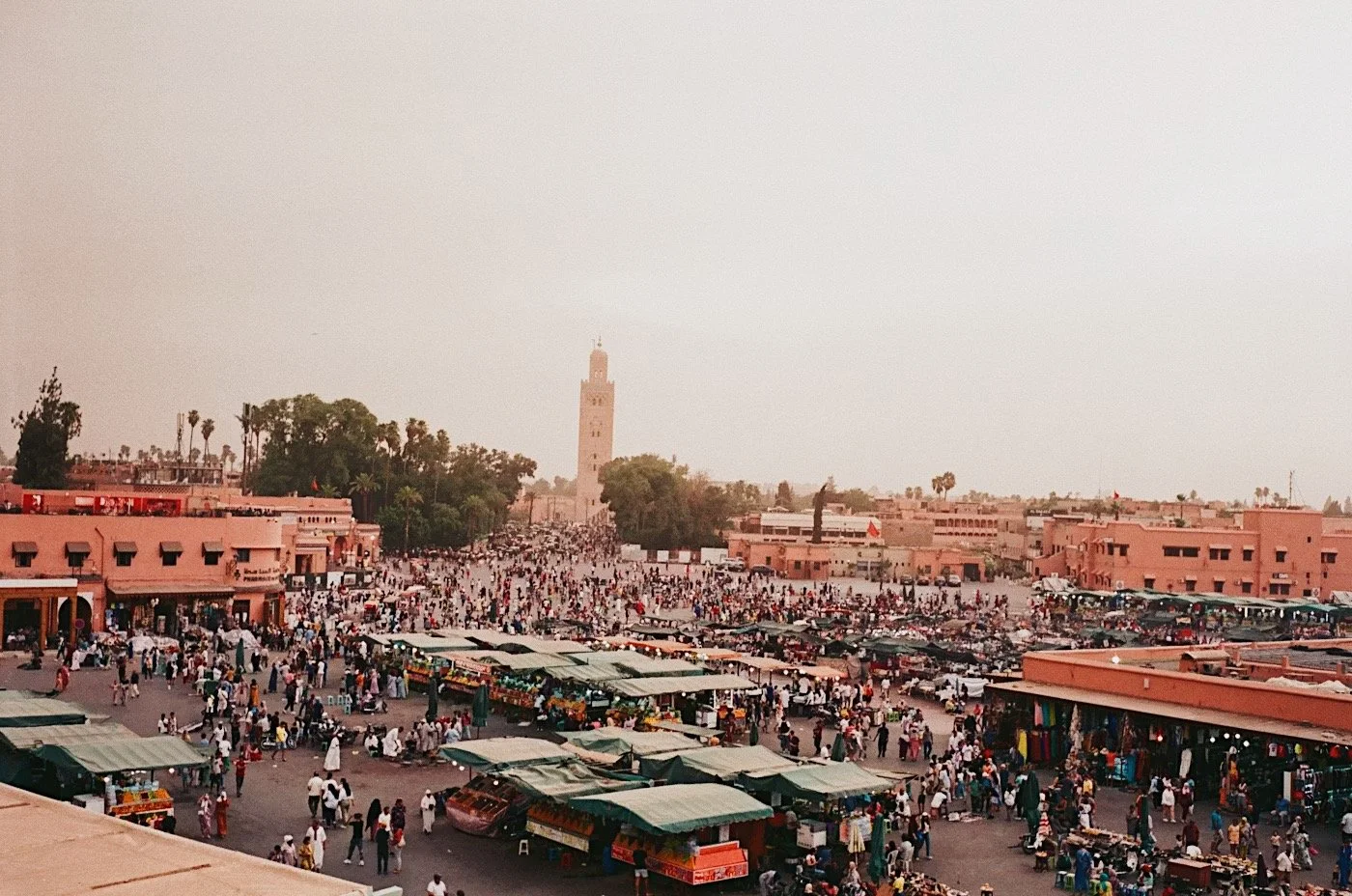
Our guides are built on firsthand experience and curated for families who want to understand a place, not just visit it. Every recommendation is somewhere we love or think you will. For a faster route through our recommendations, start with Editor's Picks or the Wander section, which strings nearby stops into ready-made "mini-itineraries."SKIP TO:
On May 9, 1969, six leading Moroccan artists carried their paintings into Jemaa el-Fna and hung them in the square. The show, Présence Plastique, lasted ten days, in the late-spring wind and dust. It ran alongside the official Salon du Printemps, a holdover from the French Protectorate that had classified Moroccan artists as naïve; the group attended long enough to read their manifesto before walking out. Their joint statement, published in the decolonial journal Souffles, called for art to reach the average person in the square, “to awaken his curiosity, his critical spirit, to stimulate him so that he integrates new plastic expressions into the rhythm of his life.” With works rooted in Amazigh pattern, Islamic geometry, and traditional craft, the exhibition argued that Morocco had one of the great abstract visual traditions in the world, one that French colonial rule had spent decades reclassifying as “folkloric” to protect the primacy of European art. Mohamed Melehi, one of the six, later said: “The Jemaa el-Fna was to let the authorities understand that art was for the people, not only for privileged society. Art is not only a precious object. It's an idea, a philosophy, a signal for freedom.”
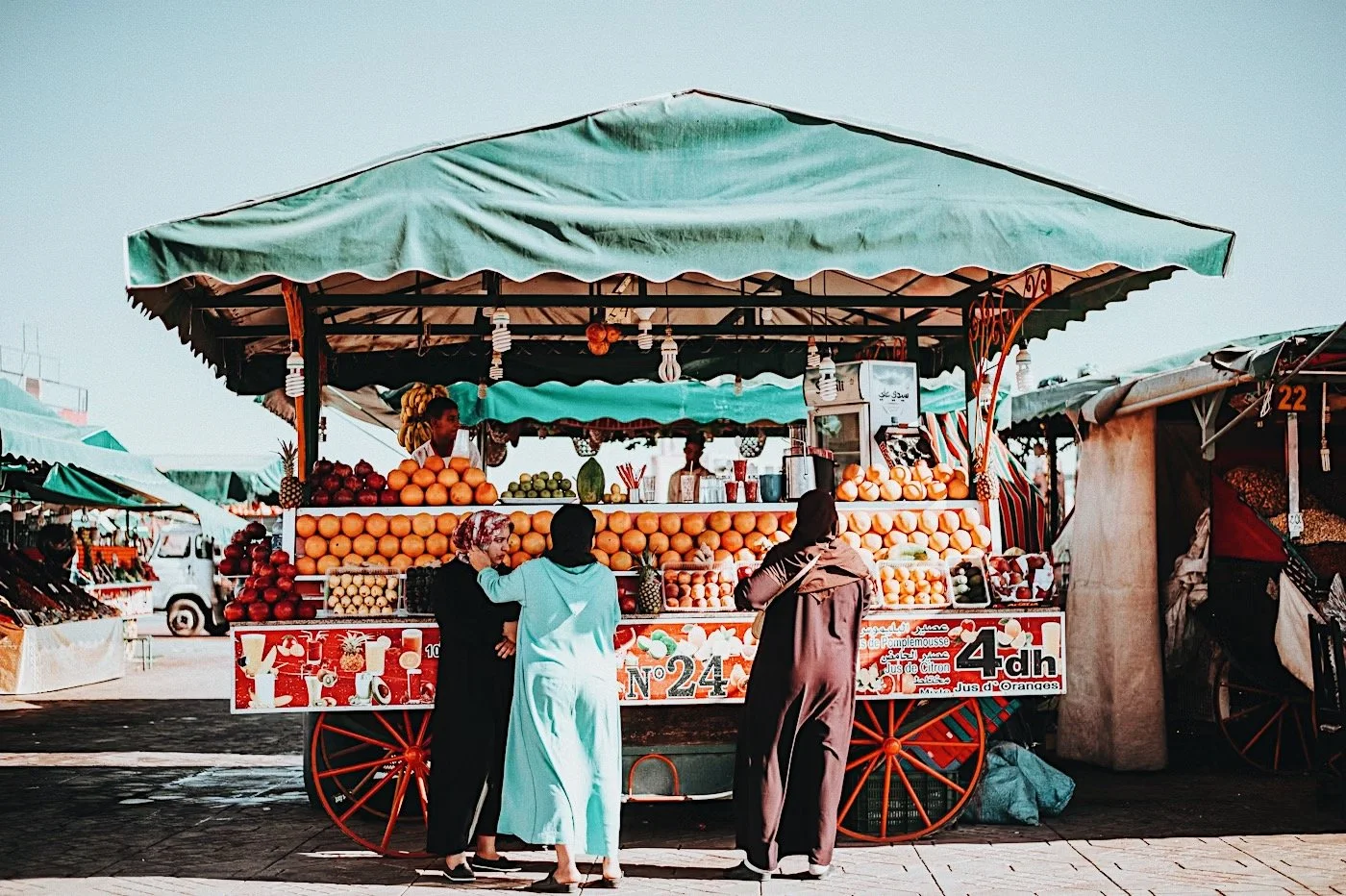
Today, Jemaa el-Fnaa functions much as it did in 1969. By day, it is a sprawl of orange-juice stalls, argan-oil vendors, and henna artists whose regular clientele is mostly local. By night, musicians and storytellers, snake charmers, and drummers. Moroccan writer Abdelkebir Khatibi, writing in La Mémoire tatouée, described Marrakech spreading out “plus énigmatique que jamais, palpitations feutrées, éparses et secrètes, boutiquiers furtifs”: more enigmatic than ever, its palpitations muffled and secret, its shopkeepers furtive. Around it, the city has accumulated museums, galleries, and the 1-54 Contemporary African Art Fair, the only international fair dedicated to art from Africa and its diaspora. The rugs, ceramics, lighting, and clothing made here draw designers as much as collectors. Hassan Hajjaj, whose art and photography draw on Moroccan popular culture, founded Riad Yima, a gallery and tea room in the medina, and Jajjah, a larger outpost in the Sidi Ghanem industrial quarter. The city is also home to MACAAL, one of the continent's leading contemporary art museums, and the Farid Belkahia Foundation in the Palmeraie, dedicated to the work of one of the artists who hung his paintings in Jemaa el-Fnaa in 1969.
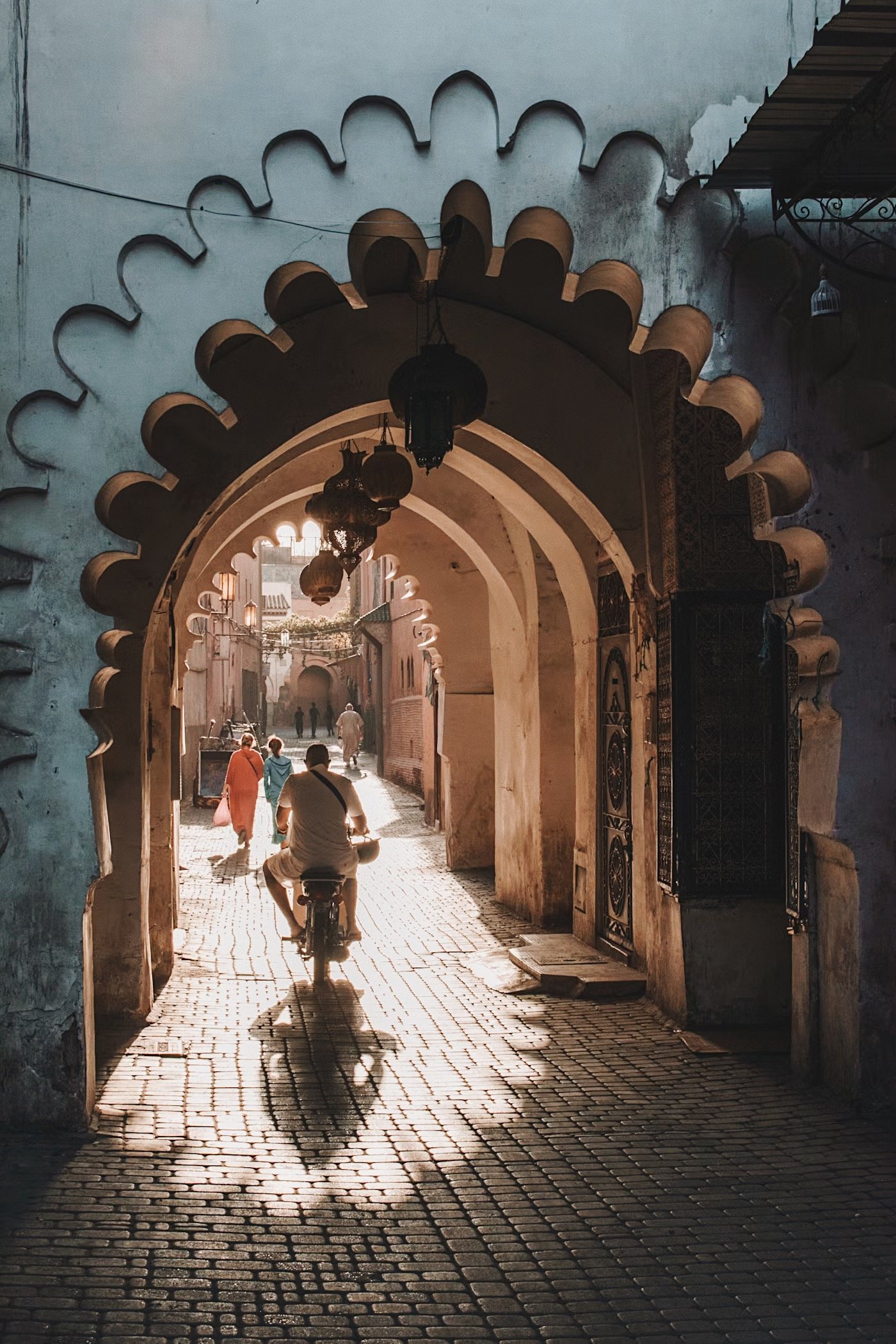
The medina belongs on every first-time visitor's itinerary. A UNESCO World Heritage Site, its layout has changed little since it was founded in the eleventh century by the Almoravid dynasty, making it one of the few places where the organization of a medieval craft economy can still be experienced. The medina is traditionally organized by trade. The dyers have their souk, the weavers their quarter, the carpenters their street; the maker of any specific object is a few turns away. The tanneries still process leather in vats of pomegranate, saffron, and poppy. On the city's edge, the Sidi Ghanem industrial quarter has become the contemporary counterpart, a district of designer studios and showrooms where the same materials turn up in contemporary work. Painter and novelist Mahi Binebine keeps his studio further out, in Tahannaout, in the foothills of the Atlas.
The city has also undergone, in the past two decades, a transformation familiar in other international places: western buyers convert riads in the medina, longtime residents move out, boutique hotels and galleries open in their place for an international clientele whose relationship to the city is largely aesthetic. Much of it borrows the city's surfaces without engaging its economics. In September 2023, a 6.8 magnitude earthquake struck Al Haouz province, killing nearly 3,000 people and destroying villages an hour from the city center. Three years later, many survivors remain in temporary housing while investment flows toward infrastructure for Morocco's role in the 2030 World Cup. In September 2025, a youth movement called GenZ212 organized protests across Morocco, highlighting a more than 35 percent unemployment rate and demanding government spending on public health and education over international sporting events, and an end to corruption. Protests spread from Casablanca, Marrakech, and Rabat to cities across the country; three people were killed when police opened fire in Lqliâa. On October 10, King Mohammed VI called for social and political reforms in an address to parliament, without mentioning the protests directly. By month's end, the government had introduced budget increases for health and education while charging more than 2,400 protesters.
None of which is a reason not to go. Morocco is a country organized around family life, and Marrakech is a city that expects and welcomes children. Children of any age with any appetite for color, craft, texture, food, and smell will find the city hard to ignore, from the snake charmers in Jemaa el-Fnaa and the camels in the Palmeraie to the orange blossom gazelles, the souks, and the Majorelle Garden. Moroccan-owned establishments will be particularly welcoming to families; more expat-run venues may not. Keep in mind that traveling with young children does require some planning. The medina's cobblestones are hard on a stroller, and taxis rarely have seatbelts, so arrange private transport if you need a car seat. Riads require a short walk from the nearest road, but most will arrange a porter to assist with bags. The practical notes below cover the logistics in more detail, along with our full recommendations for families.
PRACTICAL NOTES
Lodging in Marrakech is worth thinking through before you book; where you stay will shape your trip. Riads (traditional courtyard guesthouses) are the most distinctive option and the right choice if you plan to spend most of your time in the Medina. The lanes they occupy are impassable by car and luggage must be carried by foot, but most riads will arrange a porter to meet you. Guéliz, the modern district, is stroller-navigable and the better base if you want apartment-style accommodation or more flexibility; it sits a taxi ride from the Medina. Resort hotels outside the city have pools and space but are car-dependent for everything. Large luxury hotels just outside the Medina walls, La Mamounia among them, offer both grounds and proximity, at a premium price point.
For infants and toddlers, a carrier is essential in the Medina. Lanes are narrow, surfaces are uneven, and foot traffic is constant. A lightweight stroller works on the main routes but can be difficult on the smaller roads. Many restaurants and rooftop spaces are also stair-access only, and while some will let you leave it at the bottom, it rules out others entirely. For Guéliz, a stroller is fine. Sidi Ghanem is largely gravel between locations, with no sidewalks.
Taxis can be difficult to negotiate without French or Arabic, and many lack rear seatbelts necessary for a car seat. If you are traveling with a car seat, arrange a private transfer in advance through your hotel rather than flagging something on the street.
Jemaa el-Fnaa at dusk is worth doing once. Loud and crowded, but exciting for children: snake charmers, street performers, the full spectacle.
Cash is essential inside the Medina; outside it, cards are generally accepted, but it is helpful to have on hand regardless. ATMs are easy to find across the city, though fees can be high unless your bank has a no-fee arrangement. In the souks, price negotiation is expected, and the first number offered is rarely the final one.
Bacha Coffee regularly has multi-hour queues. Arrive before opening or plan for a long wait.
Marrakech has some of the finest hammams and spas in the world. Most hotels can arrange a hammam booking. La Mamounia and Royal Mansour Spa are both open to non-guests by reservation. Farnatchi is a reliable mid-range option with easier availability.
Summers are extremely hot and winter evenings are colder than visitors expect. Schedule outdoor time for early morning or late afternoon in summer, and pack layers regardless of season.
During Ramadan, the city shifts entirely to a nocturnal schedule. Most restaurants and cafés are closed through the day; kitchens open after sunset. Jemaa el-Fnaa becomes a nighttime feast. Keep in mind if considering travel during this time.
EDITOR’S PICKS
If you only have a day, a weekend, or a specific mood to match:
Morning: Dar El Bacha + Bacha Coffee (arrive before it opens)
Afternoon: Madrasa Ben Youssef
For design: Comptoir des Mines Galerie + a day trip to Sidi Ghanem
To eat: Dar Yacout
Sweet spot: Mon Quotidien for gazelles
Culture: Maison de la Photographie
To take home: Chabi Chic for ceramics, Moro for clothing and accessories
For a breath of air: Jardin Ocre
Beyond the city: Agafay Desert
RECOMMENDATIONS
-
Mini itineraries linking nearby highlights.
Mouassine & the Northern Souks: Arrive just before Dar El Bacha opens or expect a wait of several hours. If there's still a queue, visit the attached Museum of Confluences. Walk through the Mouassine quarter past the 16th-century fountain, four basins designed separately for people, horses, donkeys, and dogs, then into the souk des teinturiers, where dyed wool hangs in skeins over the lane. Stop at Le Jardin Secret, then Sweet & Souk or Maison Sucrée for a treat, before heading to Madrasa Ben Youssef and ending at the Maison de la Photographie.
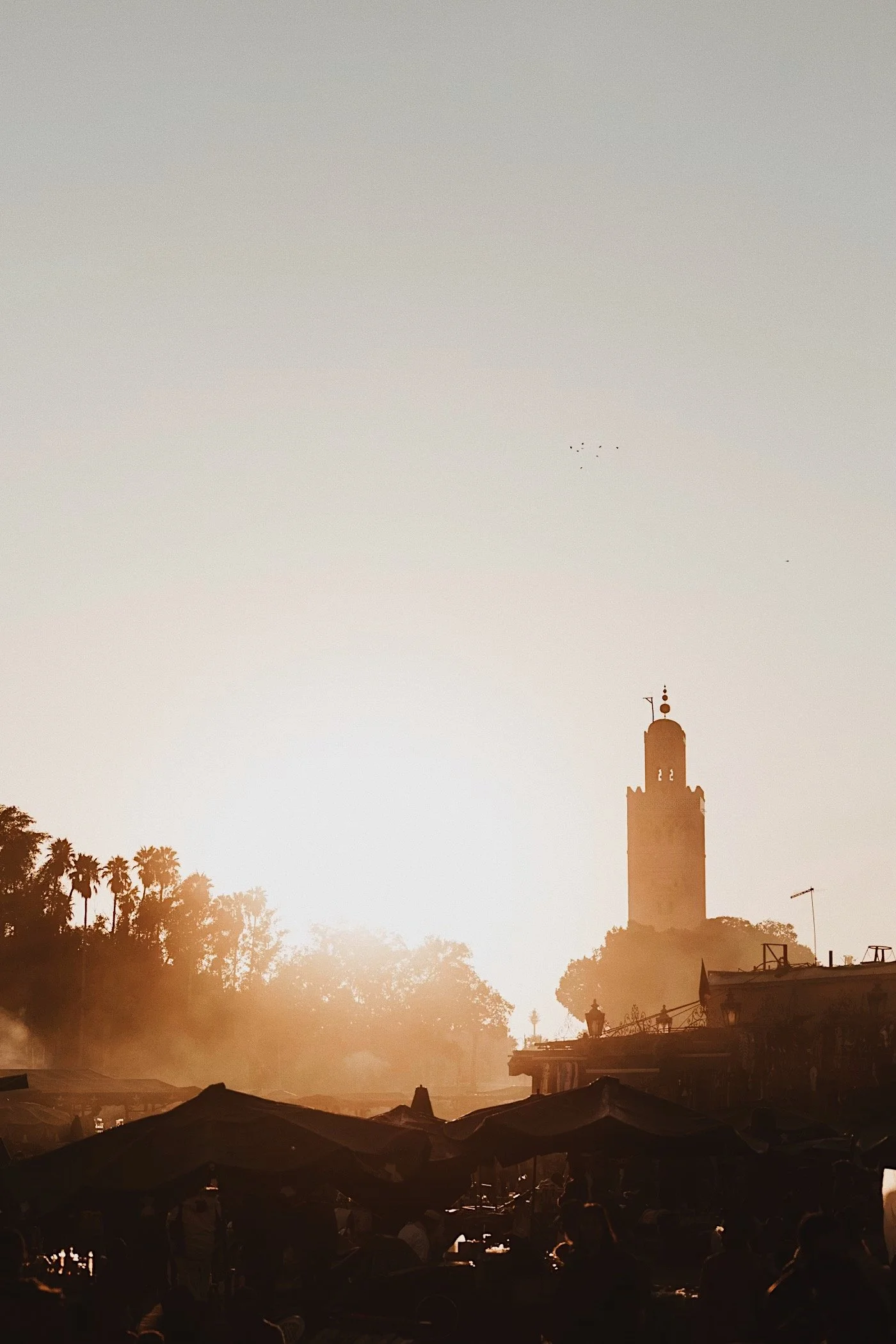
Jemaa el-Fna & the Southern Medina: Begin at the Koutoubia Mosque at the square's southwestern edge and enter Jemaa el-Fna mid-morning before the crowds build. Walk north into the covered souks toward Souk Semmarine. Return at dusk, when the gnawa musicians and food stalls take over and the square transforms entirely. Stroller-accessible across the square; carrier essential in the souks.
Medina South Circuit: Begin at the Moroccan Culinary Arts Museum, set in a restored riad. Visit Bahia Palace, followed by a rooftop lunch at Otto or L'Mida. Continue to Riad Yima for Hassan Hajjaj’s maximalist vision of Moroccan pop culture or Al Nour for handcrafted textiles made by a cooperative of women artisans. End at Kabana Rooftop or La Pergola for a drink with the Medina below.
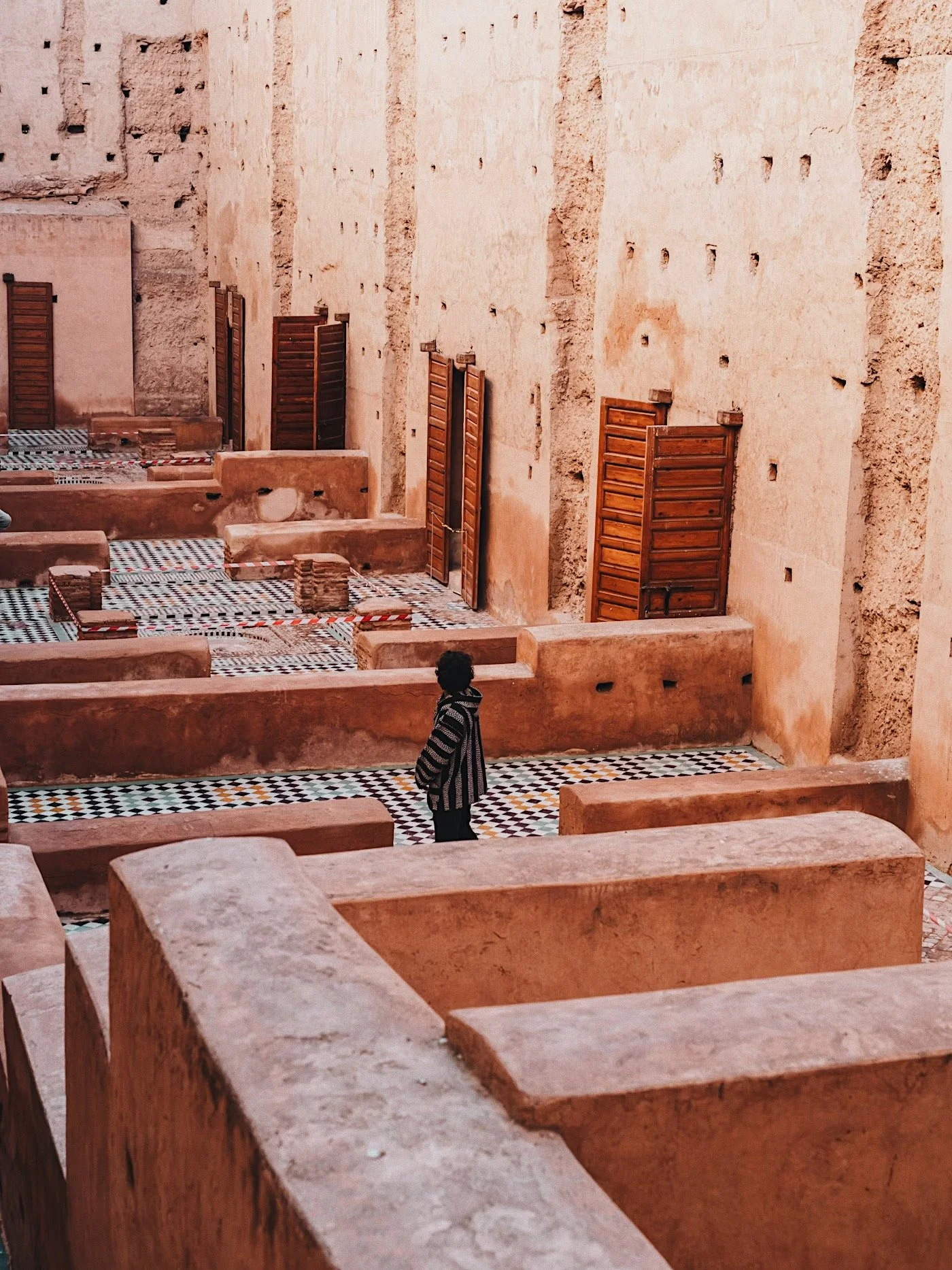
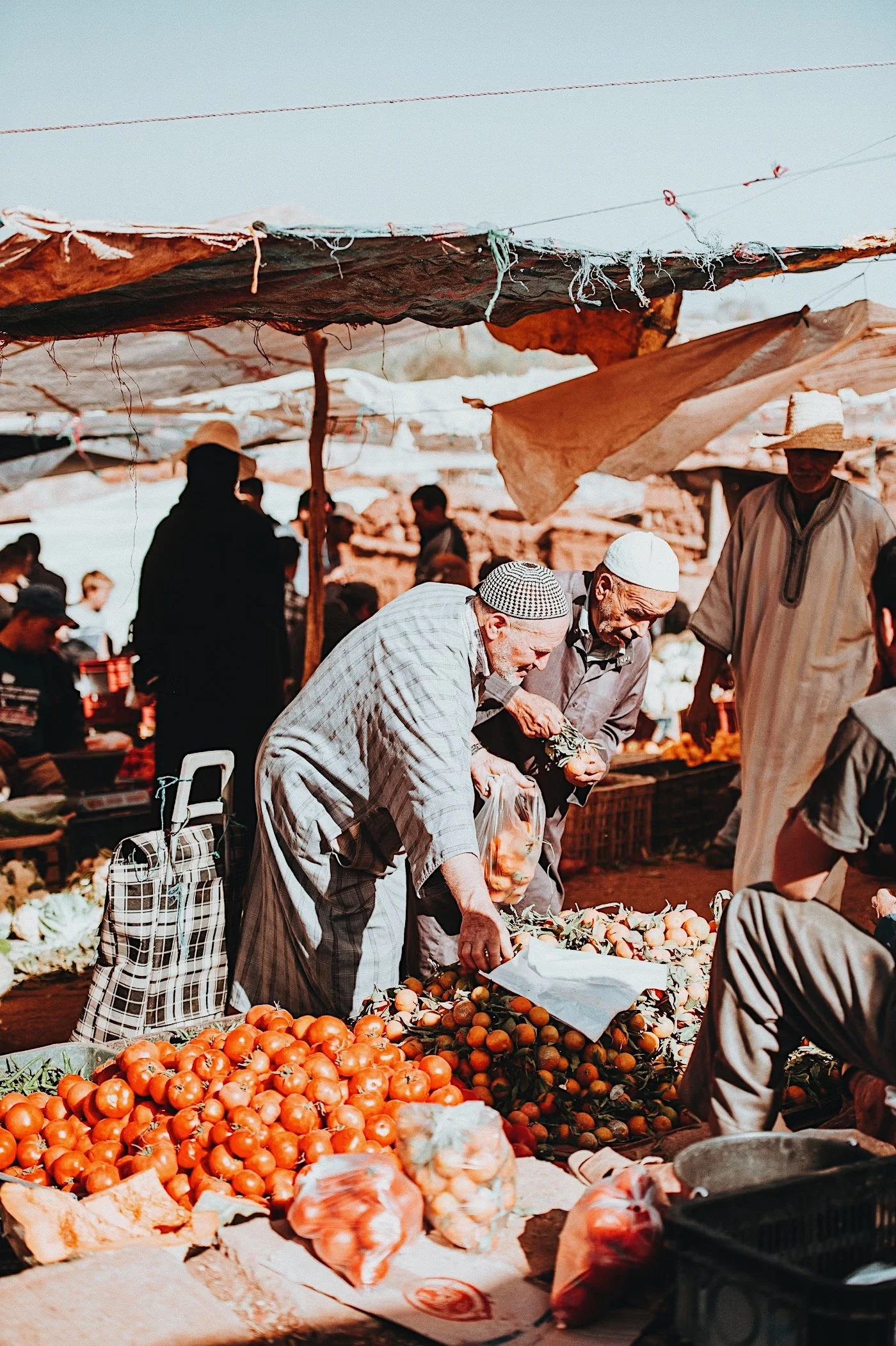
The Mellah & Palace Quarter: Begin at the ruins of El Badi and continue to the Saadian Tombs, sealed for two centuries and rediscovered by aerial survey in 1917. Walk through the Jewish Quarter (Mellah), where wrought-iron balconies distinguish it from the rest of the Medina. The market on the western edge is worth a stop for olives and preserved lemons.
Guéliz: The French-era ville nouvelle is the center of Marrakech's contemporary art scene. Begin at Galerie 127 on Avenue Mohammed V and hop between Comptoir des Mines Galerie, Musée MACMA, and Yasalam Gallery. Visit Sook Paris and Marie Bastide for locally made gifts, or Ensemble Artisanal for fixed-price craft shopping. Lunch at Plus 61 or Entrepôts, then Pétanque Social Club for cocktails.
Majorelle: Jacques Majorelle spent four decades building this garden and developing the cobalt blue that bears his name. Yves Saint Laurent and Pierre Bergé bought it in 1980 to stop a hotel development from claiming it. Go before 9am or after 4pm. Moro Marrakech and 33 Rue Majorelle are both nearby for design-focused shopping after.
Sidi Ghanem: Marrakech's industrial-creative district, a half-hour from the Medina. Skip if time is limited but worth it for those interested in the city's design and studio scene. Start at LRNCE Studio for ceramics and textiles, then the contemporary art gallery Rigotang, before heading to Jajjah, Hassan Hajjaj's café and creative space. MCC Gallery, Marrakech Fine Food, the Chabi Chic flagship, and Tipi Boutique for sustainable clothing and jewelry are all within the same radius. The stops are within walking distance of each other but spread across unpaved roads with no sidewalks.
Palmeraie: A palm grove fifteen minutes north of the Medina, with two small museums that rarely appear on itineraries. The Musée de la Palmeraie shows contemporary Moroccan art in botanical surroundings; the Musée Farid Belkahia, in the artist's former villa, covers one of the defining figures of 20th-century Moroccan painting. Jnane Rumi, a boutique hotel with a restaurant open to non-guests by reservation, rounds out a half-day with vegetable-forward Moroccan-French dishes in century-old gardens. Nothing here connects on foot; hire a car or driver for the half-day.
-
Medina
Bahia Palace: Built in the late 19th century for Grand Vizier Ba Ahmed, the complex spans enormous grounds. Painted cedar ceilings, tiled courtyards, and a series of garden rooms open onto each other.
Dar El Bacha, Musée des Confluences: Built in 1910 as the residence of Thami El Glaoui, Pasha of Marrakech, the palace now houses a museum of cultural exchange between Morocco, sub-Saharan Africa, and Andalusia. The tiled courtyards, carved cedar, and garden of orange trees are worth the visit regardless of the exhibition.
El Badi Palace: Saadian ruins from the 16th century, largely stripped by Moulay Ismail for materials used elsewhere.
El Fenn: Boutique hotel with a permanent collection of contemporary Moroccan work displayed across the public spaces. Non-guests can visit during gallery hours; call ahead to confirm.
Fondation Dar Bellarj: A restored foundouk adjacent to the Madrasa Ben Youssef, originally a sanctuary for injured storks. The foundation runs rotating exhibitions, concerts, and community workshops.
Izza Marrakech: A riad with over 300 works from contemporary artists, anchored by large-scale photographs from Leila Alaoui's Les Marocains series. Visits by appointment.
Le Monde des Arts de la Parure: Museum dedicated to the art of adornment. Jewelry, textiles, and body ornamentation from across Africa. Verify hours before visiting; opening times can be irregular.
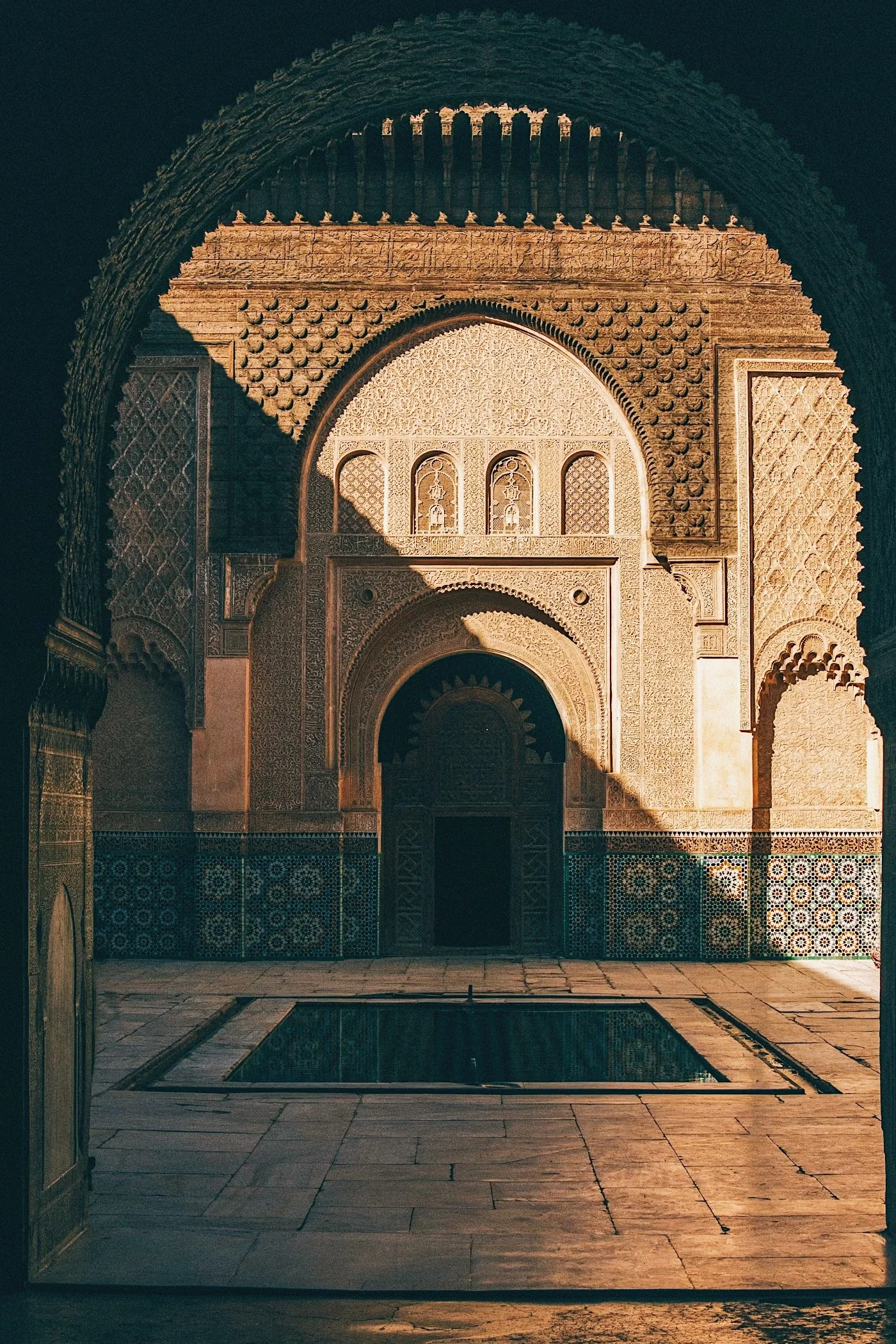
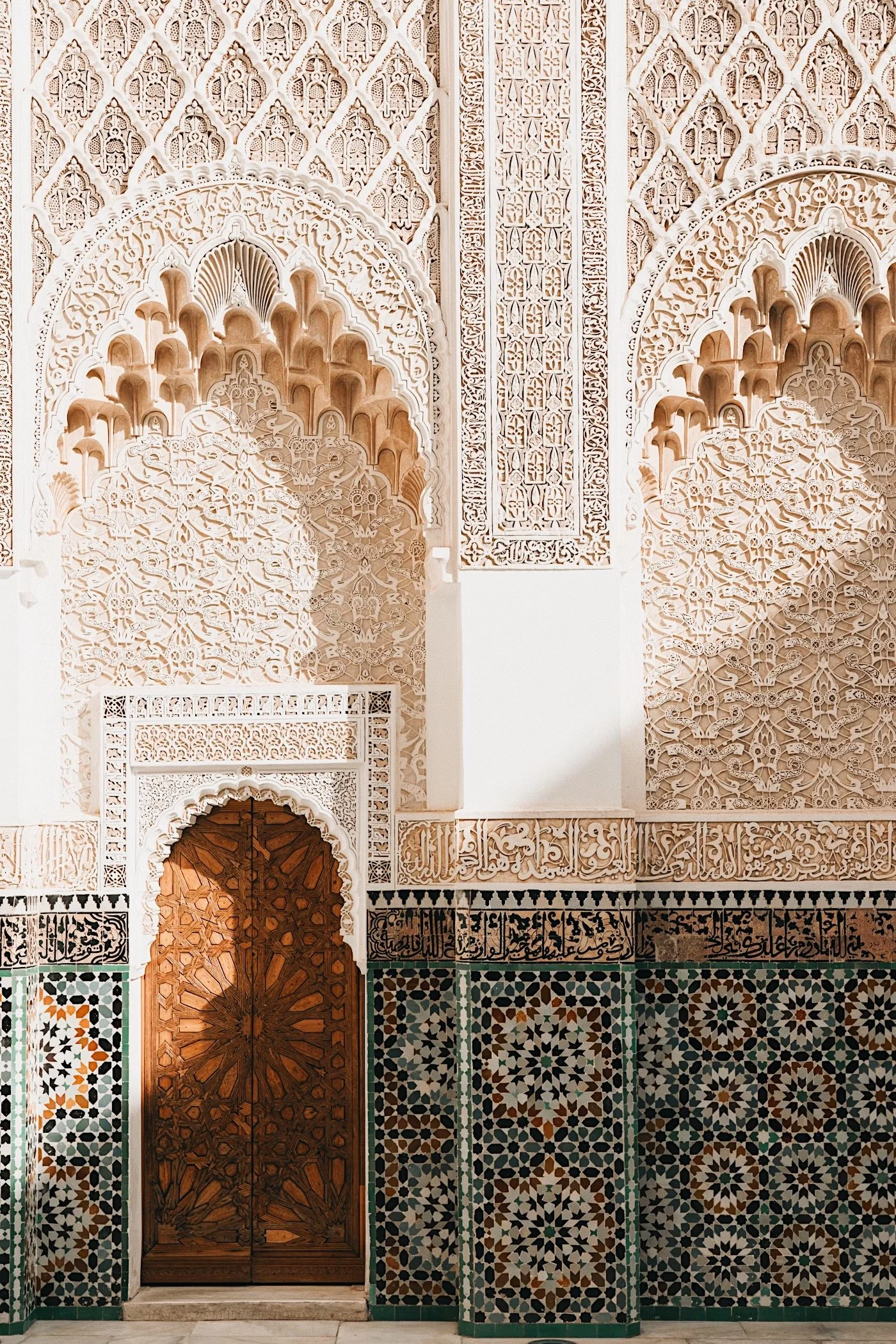
Madrasa Ben Youssef: A 14th-century Quranic school with carved cedar, zellige tile, and stucco latticework across every surface of the central courtyard. Visit in the afternoon when the light is best; book tickets online to avoid the queue.
Maison de la Photographie: Five floors of vintage Moroccan photography in a restored riad, spanning the late 19th century through the mid-20th and documenting rural life, Amazigh communities, and colonial-era Morocco.
Moroccan Culinary Arts Museum: A restored riad dedicated to Moroccan food culture, with an attached tea room.
Musée de Mouassine: A 17th-century residence dedicated to Moroccan musical traditions, with concerts every Monday, Wednesday, and Friday in the douiria. Reservations required; seating is limited.
Riad Yima: Hassan Hajjaj's space in the Medina, part gallery and part shop, maximalist in every detail. His work draws on advertising, Moroccan street culture, and souk aesthetics.
Saadian Tombs: Sealed by Moulay Ismail in the early 18th century and undiscovered until a French aerial survey in 1917. Twelve Saadian rulers are buried here beneath carved stucco and zellige that survived intact. The entrance corridor is narrow and congested by mid-morning; arrive at opening.
Guéliz
Comptoir des Mines Galerie: The gallery for contemporary Moroccan art in the city, housed in a 1932 building that was once a mining corporation headquarters.
David Bloch Gallery: Contemporary and post-graffiti work. By appointment only.
Galerie 127: The only gallery in North Africa dedicated exclusively to contemporary photography. Enter under the arcades.
Galerie 208: Supports emerging Moroccan and international artists across painting, ceramics, textiles, and photography.
Galerie Noir sur Blanc: Represents over twenty Moroccan artists across painting, photography, sculpture, and installation, with three spaces: two for exhibitions, one for workshops and artist talks.
Loft Art Gallery: Commercial gallery representing modern and contemporary artists from across the African continent.
Musée MACMA: Moroccan photography and fine arts in an intimate space, with a strong permanent collection. The painting archive moved in 2019 to the affiliated Orientalist Museum next door; the focus here is now photography.
Musée Yves Saint Laurent Marrakech: Opened in 2017 in a building by Studio KO, adjacent to Majorelle Garden. The permanent collection covers forty years of Saint Laurent's work; rotating exhibitions expand into fashion history and the influence of Morocco on his practice.
Sidi Ghanem
Jajjah: Hassan Hajjaj's café and creative space, blending art, music, and photography. Larger and more relaxed than Riad Yima.
MCC Gallery: Founded by Fatima-Zohra Bennani Bennis, a large-format space where Moroccan and international artists produce and show new work at scale.
Rigotang: Contemporary art gallery founded by the team behind Riad Jardin Secret, with a residency program for artists working in response to Marrakech. Visits by appointment.
Further Afield
MACAAL: Dedicated to African contemporary art, 40 minutes south of the city.
Musée de la Palmeraie: Contemporary Moroccan art in a botanical garden setting.
Musée Farid Belkahia: Housed in the artist's former villa, the museum covers the work of Farid Belkahia, one of the central figures of 20th-century Moroccan painting. His practice drew on Amazigh symbolism, natural dyes, and copper and leather as painting surfaces.
Ramakech: French artist Jean-François Fourtou's monumental sculpture park, with oversized animals and figures across a large outdoor site.
-
Sensory
Marrakech Baby Spa: Hammam rituals and massages adapted for babies and toddlers. Book in advance.
Outdoor
Anima Garden: André Heller's sculpture garden, twenty minutes from the city. Surreal enough to hold adult attention; open enough to work for children.
Beldi Country Club: Fifteen hectares of rose gardens, olive groves, bamboo alleys, and water lily ponds, ten minutes from the Medina. Day access available; confirm in advance.
Cactus Thiemann: One of Africa's largest cacti farms, with more than 150 varieties.
Cyber Parc: Free public park with lawns, a play area, and shade.
Jardin Ocre (Royal Palm Marrakech): Play area and farm animals within the resort gardens, designed with small children in mind. Day access available; confirm rates in advance.
Menara Gardens: A 16th-century reflecting pool, olive groves, and Atlas views, with far fewer visitors than Majorelle.
Other
Photomaton (Medina): A vintage photo booth at 36 Rue Kennaria. Four frames, instant prints.
-
Chosen for food first; space and welcome for families is the bonus.
Medina
Dar Yacout: Luxurious riad restaurant operating since the 1980s, spread across multiple lantern-lit rooms with a rooftop terrace and a set menu of Moroccan classics served course by course. Best for children old enough to sit through a long, formal dinner. Come hungry; reserve well in advance.
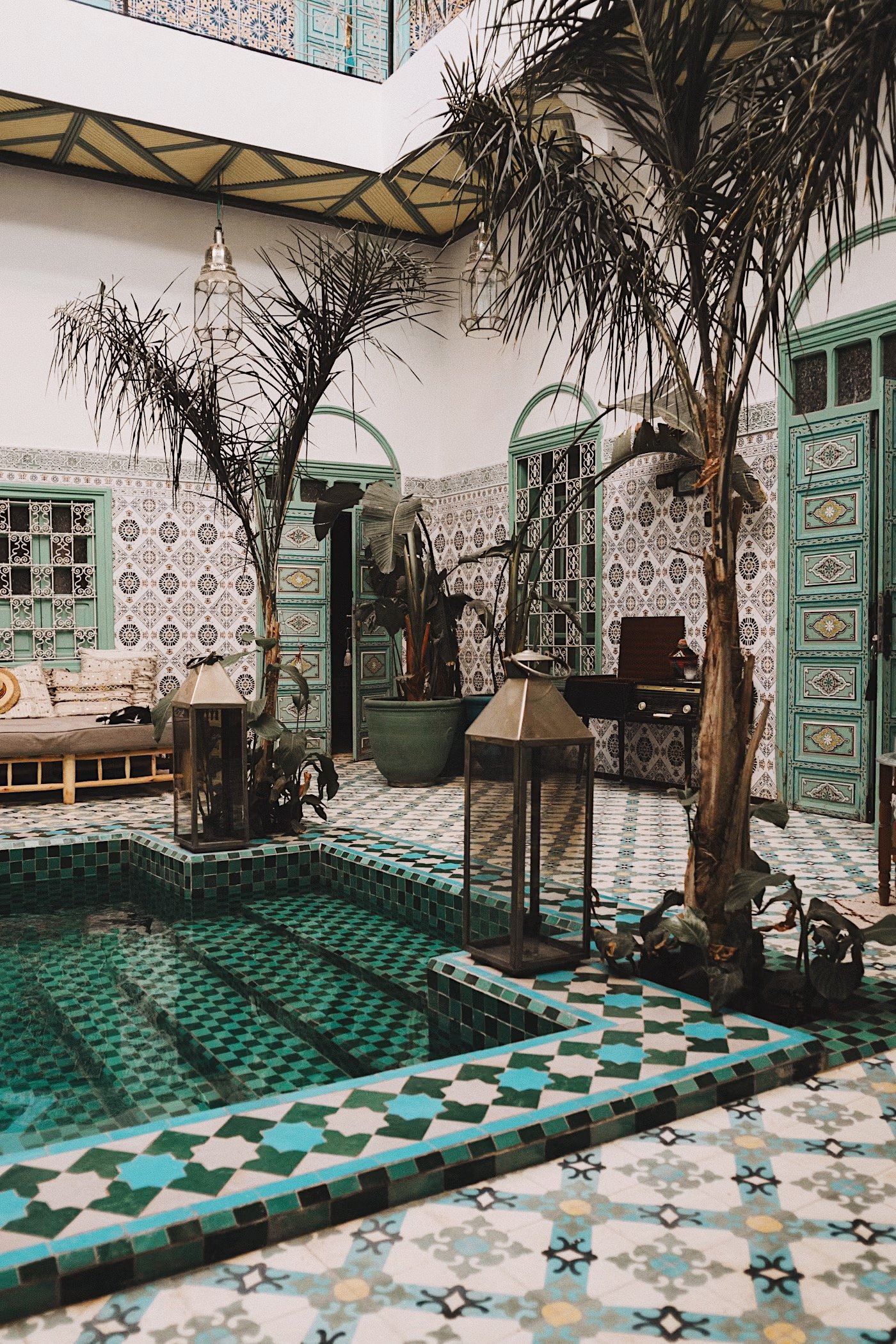
Dar Zellij: A 17th-century riad with beautiful tilework throughout and an orange blossom-scented garden. Live music on some evenings; reservations required.
Flowers Marrakech: Rooftop restaurant from Swedish-Asian chef Richard McCormick, cooking open-fire sharing plates that draw on North African and Mediterranean ingredients. One of the few Medina restaurants with a full alcohol license.
La Famille: Garden café with a daily-changing vegetarian menu; the kitchen works around what's arrived from the market that morning.
La Mamounia: Breakfast at the grand hotel is an event. Non-guests can book; call ahead to confirm availability.
Le Jardin: All-day restaurant in a 16th-century riad courtyard, shaded by banana trees and palms. Norya Ayron's atelier is upstairs.
La Pergola: Rooftop bar with live jazz and Medina views.
L'Mida Rooftop: Modern Moroccan cooking with strong Medina views. More relaxed in register than Nomad, with a menu that runs from tagines to sharing plates.
Naranj: Lebanese café and juice bar with fresh orange juice, smoothies, and outdoor seating.
Nomad: Modern Moroccan cooking from one of the team behind Plus 61, on a rooftop terrace with Medina views. Reservations recommended for dinner.
Otto Rooftop: Sunset cocktails and skyline views, without the crowds of the more prominent rooftops.
Sabich Marrakech: Casual spot for sabich sandwiches, a reminder of the Jewish culinary traditions that ran through Moroccan cities for centuries.
Guéliz
Cantine Mouton Noir: A bistro from a Casablanca-Montreal couple in a white-tiled, high-vaulted room with an open kitchen. Beef matured on site; weekend brunch has its own following. Walk-ins only, no reservations.
Mizaan: A sharing-plates restaurant from chef Abdel Alaoui, where Moroccan ingredients meet Mediterranean and Middle Eastern techniques. After nine, a DJ takes over; later still, a speakeasy opens off the kitchen.
Pétanque Club: Outdoor bar-restaurant, with a pétanque court, weekend DJ sets, and a sharing menu that runs from charcuterie boards to grilled octopus and merguez bruschetta. Cocktails lean on local ingredients.
Plus 61: Named for the Australian country code, the restaurant is built around Australian cooking. Bread, pasta, cheese, and yoghurt made in-house daily.
Sahbi Sahbi: A dinner restaurant built around the dada tradition, the women cooks who have historically kept Moroccan home cooking alive. Reservations recommended.
Palmeraie
Jnane Rumi: Chef Karin Gaasterland, formerly of El Fenn, cooks vegetable-forward Moroccan-French dishes in century-old gardens. Reservations recommended.
-
Medina
1112 Tea House: 300-year-old riad restored by the Marrakchi family behind Dar Cherifa. The menu is built around twelve teas, one from each region of Morocco; the name comes from the Islamic year etched into the wooden ceiling.
Atay Café: Multi-level café, climbing to a rooftop terrace with views over the Medina and, on clear days, to the Atlas Mountains.
Bacha Coffee: Set within Dar El Bacha, the 1910 palace of Thami El Glaoui. The menu runs to over 200 single-origin Arabica coffees from 35 countries, each served by a dedicated Coffee Master who guides the order. Arrive before opening or expect to wait hours.
Café des Épices: Three floors above the spice square, with a rooftop terrace looking out over the Medina and, on clear days, to the Atlas Mountains. Good for mint tea and fresh lemonade between souks.
Maison Sucrée: Moroccan gazelles in modern, unexpected flavors.
Mon Quotidien: Moroccan pastries and sweets. The orange blossom gazelles are the ones to try.
Medina Adjacent
Royal Mansour: Afternoon tea in the hotel's inner gardens, open to non-guests by reservation.
Guéliz
Bloom House: Chic organic café attached to a yoga and pilates studio.
Grand Café de la Poste: Colonial-era café in a landmark building, open since 1925.
Kechmara: Part café, part bar, part cultural space, with a 1970s interior.
Pâtisserie Amandine: French-Moroccan pâtisserie, open since 1997. The Moroccan pastries, cornes de gazelle, ghriba, and chebakia, are made with 100% almonds.
-
Design & Objects
33 Rue Majorelle: Concept store carrying Moroccan fashion, homewares, and objects from emerging local brands, from caftans and babouches to beldi glassware and children's clothing. One of the only places in the city to find Zyne, the Casablanca luxury shoe label sold on Net-a-Porter and made by women's cooperatives.
Azalai Urban Souk: Multi-vendor market with independent artisans and designers.
Booklore: English-language bookshop with a solid selection on Moroccan literature, history, and architecture alongside broader fiction and nonfiction.
Chabi Chic: Modern Moroccan ceramics and homewares. The flagship is in Sidi Ghanem; other locations can be found near Majorelle, in the Medina, or just outside the city at the Beldi Country Club.
Ensemble Artisanal: Government-run fixed-price artisan market near the Koutoubia. No negotiation required; go here first to understand fair pricing before buying in the souks.
Lalla: Colorful bags and clutches handmade in Marrakech ateliers, designed by French founder Laetitia Trouillet. The terry towel and carpet-weave pieces are the signatures.
LRNCE Studio: Ceramics and textiles by Belgian-born, Marrakech-based designer Laurence Leenaert, drawing on Moroccan craft traditions.
Maison Sarayan: Concept store and café, with antique furniture sourced from Syria, India, and sub-Saharan Africa alongside Moroccan craft pieces, textiles, and lighting. The restaurant serves Saturday brunch.
Moro Marrakech: A 1970s ochre building steps from the Jardin Majorelle, opened by interior architect Mohcyn Bousfiha and agricultural engineer Mouad Mohsine. Ceramics, textiles, crochet pieces from a cooperative of women artisans, pieces by local designers, and The Moroccans skincare line, made with prickly pear seed oil from their Essaouira farm.
Rafinity: High-end Moroccan jewelry house founded in 1969, working in 18-carat gold.
Scenti: A perfume atelier offering masterclasses in fragrance blending. More activity than shop; book in advance.
Soufiane Zarib: Second-generation rug dealer with a showroom in the Medina and a second space in Sidi Ghanem. The collection spans vintage Amazigh, Tuareg, and contemporary pieces, all handwoven from natural materials.
Yasalam: Art prints from North Africa, the Levant, and the Gulf — illustration, photography, Arabic typography, and modern Islamic art.
Textiles & Fashion
Al Nour: Handcrafted textiles and apparel made by a cooperative of women artisans, including women with disabilities.
Karim Bouriad Bazar: High-quality caftans, jellabas, and tunics. Custom pieces can be made to order with enough lead time.
Marrakshi Life: Gender-neutral, made-to-order fashion label working exclusively with fabrics handwoven by an in-house team of artisans. The atelier is in Sidi Ghanem.
Norya Ayron: Limited-edition kaftans and abayas made in exclusive fabrics, from an atelier above Le Jardin in the Medina. Two locations; the Medina address is the original.
Sook Paris: French and Moroccan apparel and jewelry, with a commitment to local production and craft.
Tipi Boutique: Sustainable and bohemian-style clothing, jewelry, and décor.
YZA: Handmade raffia bags, resort wear, and charms, with a Moroccan design sensibility.
Markets
Souk Chérifia: Covered multi-vendor souk in the Medina with independent designers and artisans, a step removed from the main souk circuit.
For Children
Atelier Bébé et Santé: Baby and children's goods with a curated focused selection.
Baby First: Large baby boutique stocked with clean skincare and travel gear. Useful for restocking mid-trip.
Edible
Arganino: Small souk shop specializing in pure cosmetic and culinary argan oil. Staff explain the production process; the quality is consistent and the pricing transparent.
Marrakech Fine Food: Gourmet Moroccan pantry goods — preserved lemons, argan oil, spice blends.
-
If your timing lines up, consider adding these to your trip.
1-54 Contemporary African Art Fair (February, La Mamounia): Founded by Moroccan curator Touria El Glaoui, the fair takes its name from the 54 countries of the continent. The Marrakech edition, held at La Mamounia, brings together galleries and artists from across Africa and the diaspora.
Beldi Rose Gardens (April–May): The 12,000 rose bushes at Beldi Country Club peak around then. Day access available; confirm in advance.
Festival National des Arts Populaires (July, El Badi Palace): Traditional Moroccan music, dance, and horsemanship across five evenings in the ruins of El Badi Palace. Now in its fifth decade.
Marrakech International Film Festival (November/December): Moroccan, African, and international cinema, with free outdoor screenings sometimes held on Jemaa el-Fna. Check programming before planning around it.
-
For when you have a babysitter. Our top four picks, no more.
Comptoir Darna: Dinner with belly dancers, acrobats, and Gnawa musicians in a 1930s villa in Hivernage. Book ahead.
Restaurant Villa Aaron: A riad restaurant and bar with a sharing menu, running Moroccan ingredients through a Mediterranean kitchen. Reservations required.
Baromètre: Craft cocktail bar down a staircase and through an unmarked door in Résidence Al Houda.
Farasha Farmhouse: Boutique farm and hotel 30 min from the city, with a communal menu built around what the farm produces and a 50-metre pool. No children allowed; day access by reservation.
-
Day trips and overnights for a longer stay.
Agafay Desert: A rocky plateau 40 min south of the city, with enough distance to shift the atmosphere entirely. Several properties offer family glamping, camel rides, and stargazing at night.
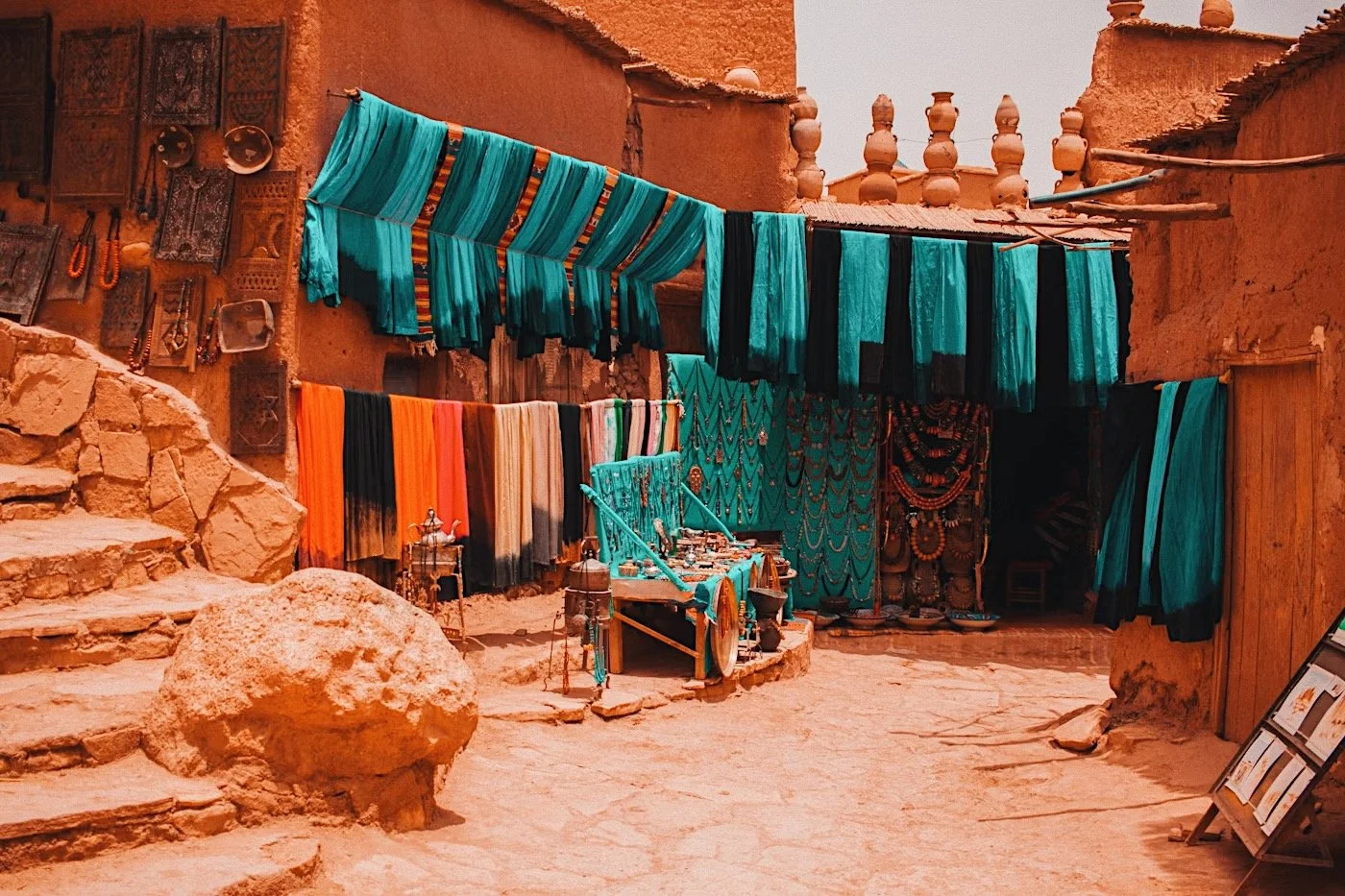
Aït-Ben-Haddou: UNESCO kasbah village 3 hours from Marrakech, used as a filming location for Gladiator, Game of Thrones, and Lawrence of Arabia. Pairs well with an overnight in Ouarzazate and a visit to Taman'Art Space.
Atlas Mountains & Imlil: Under 2 hours from Marrakech. Imlil is the main trekking base for Jebel Toubkal, but a short walk through the terraced Amazigh villages justifies the drive on its own. Best in spring and autumn; the valley road gets congested on summer weekends.
Essaouira: An Atlantic port city 3 hours from Marrakech, with a history running from Portuguese fort to trans-Saharan trading hub to a Jewish and Muslim commercial center. Gnawa music, rooted in the traditions of enslaved West Africans brought north through the port, is common here; the annual festival each June draws musicians from across the world.
Kasbah Bab Ourika: Forty-five minutes from Marrakech, an eco-lodge built from rammed earth on a hilltop at the apex of the Ourika Valley. At 900 metres above the city, it runs several degrees cooler in summer; 93% of the staff come from surrounding villages.
Kasbah Tamadot: Richard Branson's 1920s governor's residence turned luxury retreat, layered with antiques from India, Africa, and Asia alongside Moroccan furnishings. Lunch, tea, and property tours available without an overnight. About 45 minutes from Marrakech.
STORIES FOR THE ROAD
*Some links are affiliate links. Chouette may earn a small commission at no cost to you.
For children
One Wish: Fatima al-Fihri and the World's Oldest University by M.O. Yuksel, illustrated by Mariam Quraishi (ages 4–8): The true story of the 9th-century Moroccan woman who built the University of al-Qarawiyyin in Fez, still the oldest continuously operating university in the world.
For parents
The Hospital by Ahmed Bouanani: A portrait of postcolonial Morocco rendered through a man who cannot leave a hospital that may not exist.
The Moor's Account by Laila Lalami: A fictionalized account of Estebanico, a Moroccan-born enslaved man who was the first African explorer of North America.
This Blinding Absence of Light by Tahar Ben Jelloun: Based on real testimonies, Ben Jelloun reconstructs the desert concentration camps in which King Hassan II held political enemies in underground cells.
The Blue Caftan (film) directed by Maryam Touzani: A husband and wife who run a traditional caftan atelier in Salé take on a young apprentice.
Explore more of our reading lists on Bookshop.
These resources are updated periodically.
Have a suggestion? Let us know at hello@bychouette.com
